

Going to College Is a Transition for the Whole Family
Going to College Is a Transition for the Whole Family
College move-in is often captured in pictures: packed cars, dorm-room decorations, new roommates, smiling parents, and one last photo before someone drives away.
What the pictures don’t always capture is everything happening underneath.
For the student, there may be excitement, fear, relief, homesickness, anticipation, and the sudden realization that this is really happening.
For the parent, there may be enormous pride alongside a quiet ache that is harder to explain.
Going to college is a transition for the student. But sending someone you love to college is a transition, too.
And for returning students and their families, these feelings do not necessarily disappear after freshman year.
For Students: You Can Be Ready and Still Struggle
There is a lot of messaging around college that tells students how they are supposed to feel.
You’re supposed to be excited. You’re supposed to love the independence. You’re supposed to make friends, find your people, enjoy college life, and somehow know how to manage everything on your own.
But becoming more independent does not happen overnight.
College can mean managing academics, meals, laundry, money, appointments, relationships, sleep, roommates, deadlines, social expectations, and your own mental health—often without the familiar structure that existed at home.
Research has shown that the transition to college can involve significant changes in students' routines, relationships, social environments, and psychological well-being (Conley et al., 2014).
Even when you wanted this change, adjusting to it can be hard.
You can be ready to leave home and miss it once you’re gone.
You can make friends and still feel lonely.
You can enjoy your independence and occasionally wish someone else would tell you what to do.
You can have a great day and cry that night.
None of those experiences cancel each other out.
Returning to College Can Be an Adjustment, Too
There is often less attention given to students who are going back to college.
After spending weeks or months at home, returning to campus can mean another major shift in routine.
Suddenly there are roommates again. Classes begin. Deadlines return. Sleep schedules change. Social calendars fill up. Students who became accustomed to home routines may find themselves needing to rebuild structure almost overnight.
Returning students may also be carrying expectations based on previous semesters.
I should know how to do this by now.
But knowing what college is like does not mean every transition back will be easy.
Each semester can bring different classes, relationships, living arrangements, responsibilities, stressors, and versions of yourself.
You are allowed to need time to adjust—even if you have done this before.
For Parents: Your Role Is Changing, Not Disappearing
While students are figuring out independence, parents are often navigating something much quieter.
For years, you may have known where your child was sleeping at night. You knew when they came home, whether they ate dinner, when something seemed wrong, and when they needed help—even when they insisted they didn't.
And then you leave them at college.
You may drive away feeling incredibly proud while simultaneously fighting the urge to turn the car around.
You might walk past their empty bedroom.
Notice how quiet the house feels.
Wonder whether they are eating.
Try not to text again.
Wait for the phone to ring.
This part of parenting can be complicated because the goal has always been to help your child become independent—and then, eventually, they start doing exactly that.
That can feel wonderful.
And painful.
Pride and sadness can exist in the same moment.
Supporting Them Without Solving Everything
One of the challenges for parents during this stage is figuring out when to step in and when to stay nearby.
Your college student may call because they are homesick, overwhelmed by a class, frustrated with a roommate, or convinced that everything is falling apart.
The instinct to fix it can be strong.
But sometimes what they need first is not a solution.
They need somewhere safe to land.
There is a difference between saying, “Here’s what you need to do,” and asking, “What do you think you want to do?”
Young adulthood includes learning that difficult moments can be handled. A bad grade can be addressed. A roommate conflict can be navigated. A professor can be approached. A lonely weekend does not mean college will always feel lonely.
Parents can support that growth without disappearing from it.
Supporting independence does not mean you stop being their safe place. Sometimes it means learning how to be their safe place from a little farther away.
When Home Feels Different, Too
College can also change the relationship between students and parents when everyone comes back together.
A student who has spent months making their own decisions may return home and struggle with old expectations or household rules.
Parents may be surprised when the child who left comes home more independent—or simply different.
This can create tension even in close families.
Both sides may need to renegotiate what the relationship looks like now.
The transition into adulthood is not one moment at age 18. It is a gradual process of figuring out independence, connection, boundaries, responsibility, and how family relationships evolve along the way.
When the Transition Feels Harder Than Expected
Some discomfort is expected during a major life transition. But students and parents should still pay attention when something feels significantly different or continues to worsen.
For students, persistent anxiety or sadness, significant changes in sleep or appetite, isolation, difficulty attending classes or completing responsibilities, or feeling unable to cope may signal that additional support is needed.
Parents may also find themselves struggling more than expected with worry, sadness, changing family dynamics, or uncertainty about their new role.
Getting support does not have to mean that something has gone terribly wrong.
Sometimes support simply gives people somewhere to make sense of a major change while they are living through it.
A New Chapter for Everyone
Eventually, the dorm room gets unpacked.
The parent makes the drive home.
Classes start.
Texts become less frequent.
New routines begin to form.
The unfamiliar slowly becomes familiar.
But adjustment takes time.
Students do not have to have everything figured out on move-in day.
Parents do not have to stop worrying when they drive away.
Students can be excited and homesick.
Parents can be proud and sad.
Both can be ready for what comes next and still miss what came before.
Going to college is not only about leaving home. It is about learning how to carry home, family, independence, and connection with you in a different way.
And maybe that is one of the hardest—and most meaningful—parts of the transition.
References
Conley, C. S., Kirsch, A. C., Dickson, D. A., & Bryant, F. B. (2014). Negotiating the transition to college: Developmental trajectories and gender differences in psychological functioning, cognitive-affective strategies, and social well-being. Emerging Adulthood, 2(3), 195–210. https://doi.org/10.1177/2167696814521808
College move-in is often captured in pictures: packed cars, dorm-room decorations, new roommates, smiling parents, and one last photo before someone drives away.
What the pictures don’t always capture is everything happening underneath.
For the student, there may be excitement, fear, relief, homesickness, anticipation, and the sudden realization that this is really happening.
For the parent, there may be enormous pride alongside a quiet ache that is harder to explain.
Going to college is a transition for the student. But sending someone you love to college is a transition, too.
And for returning students and their families, these feelings do not necessarily disappear after freshman year.
For Students: You Can Be Ready and Still Struggle
There is a lot of messaging around college that tells students how they are supposed to feel.
You’re supposed to be excited. You’re supposed to love the independence. You’re supposed to make friends, find your people, enjoy college life, and somehow know how to manage everything on your own.
But becoming more independent does not happen overnight.
College can mean managing academics, meals, laundry, money, appointments, relationships, sleep, roommates, deadlines, social expectations, and your own mental health—often without the familiar structure that existed at home.
Research has shown that the transition to college can involve significant changes in students' routines, relationships, social environments, and psychological well-being (Conley et al., 2014).
Even when you wanted this change, adjusting to it can be hard.
You can be ready to leave home and miss it once you’re gone.
You can make friends and still feel lonely.
You can enjoy your independence and occasionally wish someone else would tell you what to do.
You can have a great day and cry that night.
None of those experiences cancel each other out.
Returning to College Can Be an Adjustment, Too
There is often less attention given to students who are going back to college.
After spending weeks or months at home, returning to campus can mean another major shift in routine.
Suddenly there are roommates again. Classes begin. Deadlines return. Sleep schedules change. Social calendars fill up. Students who became accustomed to home routines may find themselves needing to rebuild structure almost overnight.
Returning students may also be carrying expectations based on previous semesters.
I should know how to do this by now.
But knowing what college is like does not mean every transition back will be easy.
Each semester can bring different classes, relationships, living arrangements, responsibilities, stressors, and versions of yourself.
You are allowed to need time to adjust—even if you have done this before.
For Parents: Your Role Is Changing, Not Disappearing
While students are figuring out independence, parents are often navigating something much quieter.
For years, you may have known where your child was sleeping at night. You knew when they came home, whether they ate dinner, when something seemed wrong, and when they needed help—even when they insisted they didn't.
And then you leave them at college.
You may drive away feeling incredibly proud while simultaneously fighting the urge to turn the car around.
You might walk past their empty bedroom.
Notice how quiet the house feels.
Wonder whether they are eating.
Try not to text again.
Wait for the phone to ring.
This part of parenting can be complicated because the goal has always been to help your child become independent—and then, eventually, they start doing exactly that.
That can feel wonderful.
And painful.
Pride and sadness can exist in the same moment.
Supporting Them Without Solving Everything
One of the challenges for parents during this stage is figuring out when to step in and when to stay nearby.
Your college student may call because they are homesick, overwhelmed by a class, frustrated with a roommate, or convinced that everything is falling apart.
The instinct to fix it can be strong.
But sometimes what they need first is not a solution.
They need somewhere safe to land.
There is a difference between saying, “Here’s what you need to do,” and asking, “What do you think you want to do?”
Young adulthood includes learning that difficult moments can be handled. A bad grade can be addressed. A roommate conflict can be navigated. A professor can be approached. A lonely weekend does not mean college will always feel lonely.
Parents can support that growth without disappearing from it.
Supporting independence does not mean you stop being their safe place. Sometimes it means learning how to be their safe place from a little farther away.
When Home Feels Different, Too
College can also change the relationship between students and parents when everyone comes back together.
A student who has spent months making their own decisions may return home and struggle with old expectations or household rules.
Parents may be surprised when the child who left comes home more independent—or simply different.
This can create tension even in close families.
Both sides may need to renegotiate what the relationship looks like now.
The transition into adulthood is not one moment at age 18. It is a gradual process of figuring out independence, connection, boundaries, responsibility, and how family relationships evolve along the way.
When the Transition Feels Harder Than Expected
Some discomfort is expected during a major life transition. But students and parents should still pay attention when something feels significantly different or continues to worsen.
For students, persistent anxiety or sadness, significant changes in sleep or appetite, isolation, difficulty attending classes or completing responsibilities, or feeling unable to cope may signal that additional support is needed.
Parents may also find themselves struggling more than expected with worry, sadness, changing family dynamics, or uncertainty about their new role.
Getting support does not have to mean that something has gone terribly wrong.
Sometimes support simply gives people somewhere to make sense of a major change while they are living through it.
A New Chapter for Everyone
Eventually, the dorm room gets unpacked.
The parent makes the drive home.
Classes start.
Texts become less frequent.
New routines begin to form.
The unfamiliar slowly becomes familiar.
But adjustment takes time.
Students do not have to have everything figured out on move-in day.
Parents do not have to stop worrying when they drive away.
Students can be excited and homesick.
Parents can be proud and sad.
Both can be ready for what comes next and still miss what came before.
Going to college is not only about leaving home. It is about learning how to carry home, family, independence, and connection with you in a different way.
And maybe that is one of the hardest—and most meaningful—parts of the transition.
References
Conley, C. S., Kirsch, A. C., Dickson, D. A., & Bryant, F. B. (2014). Negotiating the transition to college: Developmental trajectories and gender differences in psychological functioning, cognitive-affective strategies, and social well-being. Emerging Adulthood, 2(3), 195–210. https://doi.org/10.1177/2167696814521808.
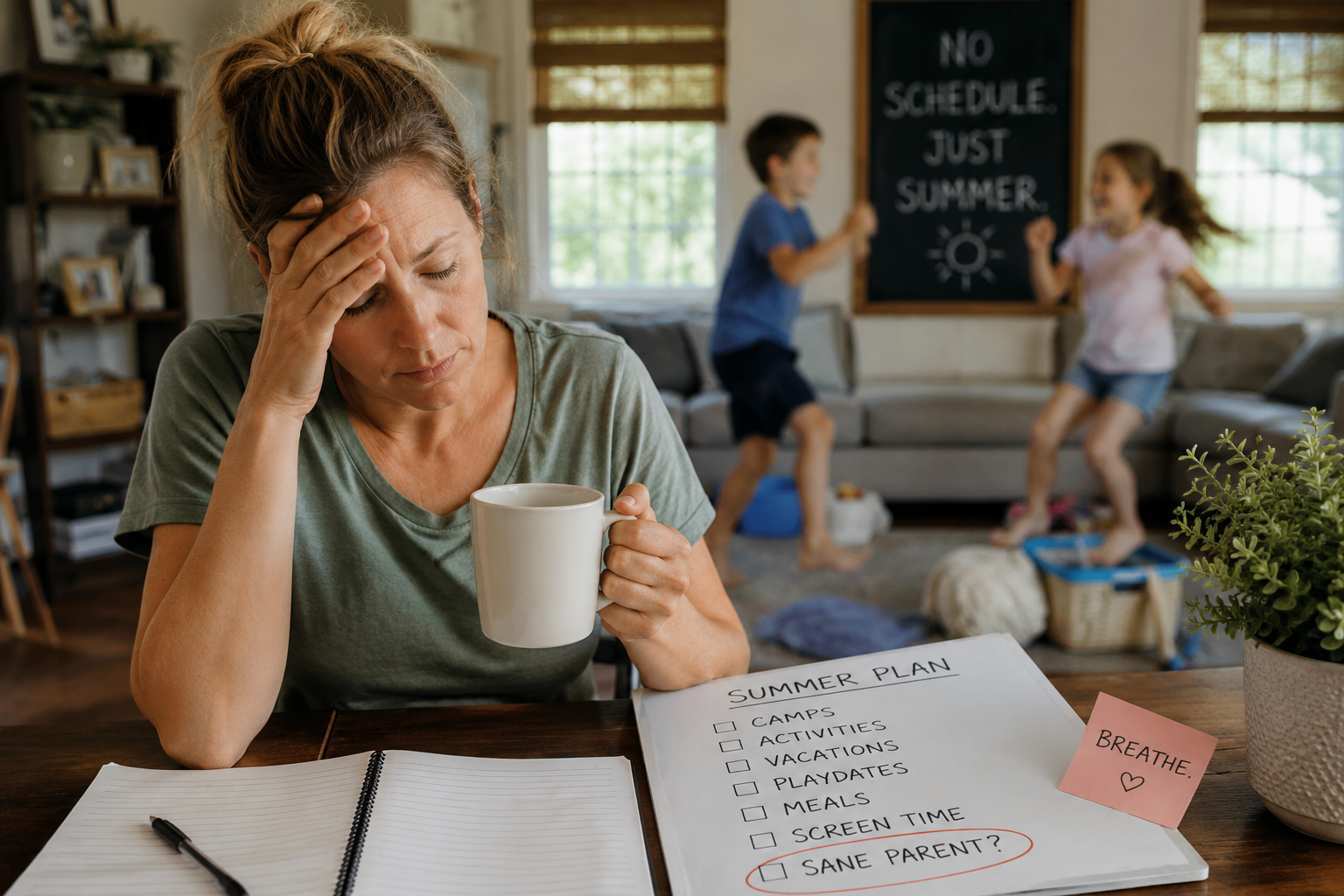
Summer Break or Summer Pressure? Letting Go of the Need to Keep Kids Busy
Why boredom, downtime, and unstructured play may be exactly what your child needs this summer.
As the school year winds down, many parents find themselves looking forward to summer while simultaneously feeling a growing sense of pressure. Suddenly, there are weeks of unstructured time to fill, camps to coordinate, schedules to manage, and the inevitable concern:
"How am I going to keep my child occupied all summer?"
Social media doesn't help. It can seem like every child is enrolled in multiple camps, taking family vacations, participating in enrichment activities, and making memories every waking moment. Parents often feel responsible for creating a summer that is fun, productive, educational, and screen-free all at the same time.
The reality is that summer doesn't have to be perfectly planned to be meaningful.
The Pressure to Keep Kids Busy
Many parents worry that if their child isn't constantly engaged in activities, they will fall behind socially, academically, or emotionally. While camps and structured activities can absolutely be beneficial, they are not the only way children grow.
Research and child development experts consistently highlight the importance of balancing structured activities with downtime. Camps can provide valuable opportunities for social connection, confidence building, skill development, and fun. However, a summer filled with back-to-back activities can sometimes create the same pressure and exhaustion that children are trying to recover from after a demanding school year (American Camp Association, n.d.).
Students spend much of the year navigating academic expectations, deadlines, extracurricular activities, and social pressures. Summer offers a chance to step away from constant performance and reconnect with activities that feel restorative rather than demanding (Associated Clinic of Psychology, n.d.).
A packed schedule isn't always better. In fact, some children thrive when they have a little more room to breathe.
The Meaning Behind "I'm Bored"
Few phrases can trigger parental frustration quite like hearing, "I'm bored."
Many parents immediately feel pressure to solve the problem. We start brainstorming activities, suggesting games, offering crafts, or organizing outings. Yet boredom itself is not harmful.
In fact, boredom may be one of the most overlooked developmental tools children have.
When children experience boredom, they have an opportunity to practice skills that are increasingly important in today's world: creativity, problem-solving, self-direction, and frustration tolerance. Unstructured time encourages children to generate their own ideas rather than relying on constant entertainment or external stimulation (No Shame On U, n.d.).
Those moments when a child is sprawled across the couch insisting there is "nothing to do" may actually be creating the conditions for imaginative play, independent thinking, and self-discovery.
Boredom isn't necessarily a problem to solve. It can be an opportunity for growth.
Summer Is Also a Time to Recharge
Summer break serves an important emotional purpose. After months of schedules, homework, tests, and social demands, children often need time to decompress.
While parents understandably focus on keeping children engaged, it's important to remember that children are not machines designed to be productive all year long. Just like adults, they benefit from opportunities to rest, recharge, and simply enjoy being.
Experts note that breaks from academic and extracurricular demands can help children reduce stress, improve emotional well-being, and return to school feeling refreshed and more resilient (Associated Clinic of Psychology, n.d.; The Zebra, 2025).
Unstructured play, outdoor activity, family time, and even simple moments of rest all contribute to healthy development. Rest is not wasted time.
Children do not need to earn their downtime.
It's Okay Not to Entertain Your Child All Day
Many parents carry an unspoken belief that they should be actively entertaining their children throughout the summer. This expectation can leave parents feeling exhausted, guilty, and inadequate.
The truth is that parents are not summer camp directors.
You can provide opportunities, support, and reasonable structure without being responsible for every moment of your child's day. Children benefit from learning how to occupy themselves, explore interests, navigate boredom, and solve problems independently.
Some of the most valuable developmental skills emerge when adults step back just enough to allow children to take the lead.
Finding a Healthy Balance
Summer does not have to be all structure or all freedom.
Many families find success by creating a simple rhythm that includes:
Some predictable structure
Opportunities for physical activity
Reading or learning opportunities
Healthy screen-time boundaries
Social connection
Plenty of unstructured play and downtime
The goal isn't to eliminate boredom. The goal is to create enough balance that children have opportunities to both engage and recharge.
Giving Yourself Permission to Let Go
Many families feel pressure to maximize every moment of summer. Parents may worry that they are not doing enough if their children are not enrolled in camps, traveling, or participating in enrichment activities. Yet this pressure can create stress for both parents and children (The Zebra, 2025).
If you're feeling pressure to make this the "best summer ever," you're not alone.
Children are unlikely to remember whether every week was packed with camps and activities. What they often remember is how they felt.
They remember feeling connected.
They remember feeling safe.
They remember feeling supported and loved.
Some of the best childhood memories come from ordinary moments—playing outside, riding bikes, making forts, spending time with family, or figuring out what to do when they're bored.
This summer, consider giving yourself permission to step back from the pressure. Your child does not need a perfectly curated summer experience. They need opportunities to grow, explore, rest, and simply be a kid.
And sometimes, that growth starts with the words every parent dreads hearing:
"I'm bored."
References
American Camp Association. (n.d.). The pressure to camp. Camping Magazine. https://www.acacamps.org/article/camping-magazine/pressure-camp
Associated Clinic of Psychology. (n.d.). Benefits of summer break. https://acp-mn.com/about-acp/blog/benefits-of-summer-break/
No Shame On U. (n.d.). Summer break. https://www.noshameonu.org/blog/summerbreak
The Zebra. (2025, July 7). Summer break or summer pressure? Why downtime feels so hard for everyone. https://thezebra.org/2025/07/07/summer-break-or-summer-pressure-why-downtime-feels-so-hard-for-everyone/
Why boredom, downtime, and unstructured play may be exactly what your child needs this summer.
As the school year winds down, many parents find themselves looking forward to summer while simultaneously feeling a growing sense of pressure. Suddenly, there are weeks of unstructured time to fill, camps to coordinate, schedules to manage, and the inevitable concern:
"How am I going to keep my child occupied all summer?"
Social media doesn't help. It can seem like every child is enrolled in multiple camps, taking family vacations, participating in enrichment activities, and making memories every waking moment. Parents often feel responsible for creating a summer that is fun, productive, educational, and screen-free all at the same time.
The reality is that summer doesn't have to be perfectly planned to be meaningful.
The Pressure to Keep Kids Busy
Many parents worry that if their child isn't constantly engaged in activities, they will fall behind socially, academically, or emotionally. While camps and structured activities can absolutely be beneficial, they are not the only way children grow.
Research and child development experts consistently highlight the importance of balancing structured activities with downtime. Camps can provide valuable opportunities for social connection, confidence building, skill development, and fun. However, a summer filled with back-to-back activities can sometimes create the same pressure and exhaustion that children are trying to recover from after a demanding school year (American Camp Association, n.d.).
Students spend much of the year navigating academic expectations, deadlines, extracurricular activities, and social pressures. Summer offers a chance to step away from constant performance and reconnect with activities that feel restorative rather than demanding (Associated Clinic of Psychology, n.d.).
A packed schedule isn't always better. In fact, some children thrive when they have a little more room to breathe.
The Meaning Behind "I'm Bored"
Few phrases can trigger parental frustration quite like hearing, "I'm bored."
Many parents immediately feel pressure to solve the problem. We start brainstorming activities, suggesting games, offering crafts, or organizing outings. Yet boredom itself is not harmful.
In fact, boredom may be one of the most overlooked developmental tools children have.
When children experience boredom, they have an opportunity to practice skills that are increasingly important in today's world: creativity, problem-solving, self-direction, and frustration tolerance. Unstructured time encourages children to generate their own ideas rather than relying on constant entertainment or external stimulation (No Shame On U, n.d.).
Those moments when a child is sprawled across the couch insisting there is "nothing to do" may actually be creating the conditions for imaginative play, independent thinking, and self-discovery.
Boredom isn't necessarily a problem to solve. It can be an opportunity for growth.
Summer Is Also a Time to Recharge
Summer break serves an important emotional purpose. After months of schedules, homework, tests, and social demands, children often need time to decompress.
While parents understandably focus on keeping children engaged, it's important to remember that children are not machines designed to be productive all year long. Just like adults, they benefit from opportunities to rest, recharge, and simply enjoy being.
Experts note that breaks from academic and extracurricular demands can help children reduce stress, improve emotional well-being, and return to school feeling refreshed and more resilient (Associated Clinic of Psychology, n.d.; The Zebra, 2025).
Unstructured play, outdoor activity, family time, and even simple moments of rest all contribute to healthy development. Rest is not wasted time.
Children do not need to earn their downtime.
It's Okay Not to Entertain Your Child All Day
Many parents carry an unspoken belief that they should be actively entertaining their children throughout the summer. This expectation can leave parents feeling exhausted, guilty, and inadequate.
The truth is that parents are not summer camp directors.
You can provide opportunities, support, and reasonable structure without being responsible for every moment of your child's day. Children benefit from learning how to occupy themselves, explore interests, navigate boredom, and solve problems independently.
Some of the most valuable developmental skills emerge when adults step back just enough to allow children to take the lead.
Finding a Healthy Balance
Summer does not have to be all structure or all freedom.
Many families find success by creating a simple rhythm that includes:
Some predictable structure
Opportunities for physical activity
Reading or learning opportunities
Healthy screen-time boundaries
Social connection
Plenty of unstructured play and downtime
The goal isn't to eliminate boredom. The goal is to create enough balance that children have opportunities to both engage and recharge.
Giving Yourself Permission to Let Go
Many families feel pressure to maximize every moment of summer. Parents may worry that they are not doing enough if their children are not enrolled in camps, traveling, or participating in enrichment activities. Yet this pressure can create stress for both parents and children (The Zebra, 2025).
If you're feeling pressure to make this the "best summer ever," you're not alone.
Children are unlikely to remember whether every week was packed with camps and activities. What they often remember is how they felt.
They remember feeling connected.
They remember feeling safe.
They remember feeling supported and loved.
Some of the best childhood memories come from ordinary moments—playing outside, riding bikes, making forts, spending time with family, or figuring out what to do when they're bored.
This summer, consider giving yourself permission to step back from the pressure. Your child does not need a perfectly curated summer experience. They need opportunities to grow, explore, rest, and simply be a kid.
And sometimes, that growth starts with the words every parent dreads hearing:
"I'm bored."
References
American Camp Association. (n.d.). The pressure to camp. Camping Magazine. https://www.acacamps.org/article/camping-magazine/pressure-camp
Associated Clinic of Psychology. (n.d.). Benefits of summer break. https://acp-mn.com/about-acp/blog/benefits-of-summer-break/
No Shame On U. (n.d.). Summer break. https://www.noshameonu.org/blog/summerbreak
The Zebra. (2025, July 7). Summer break or summer pressure? Why downtime feels so hard for everyone. https://thezebra.org/2025/07/07/summer-break-or-summer-pressure-why-downtime-feels-so-hard-for-everyone/

Spring Break Pressure: When “Fun” Feels Like a Lot for Parents
Spring break is supposed to feel fun—but for many parents, it comes with pressure.
Pressure to plan something memorable. Pressure to keep kids entertained. Pressure to make the week feel special. And for many families, pressure to spend money—on trips, camps, and activities—at a time when everything already feels expensive.
While spring break is often portrayed as a carefree pause from routine, the reality for many parents looks very different. In fact, school breaks can create additional stress, not only because of increased childcare demands, but also because they disrupt the structure and support that families rely on during the school year.
One often overlooked stressor is financial. When school is in session, many families rely on consistent access to free or reduced-price meals. During spring break, that support disappears, leaving parents to fill the gap with additional grocery costs at a time when household budgets are already strained (Food Research & Action Center [FRAC], 2026). For some families, this can mean providing an extra 10 or more meals per child in a single week without any increase in income (Feed the Children, n.d.). As the cost of living continues to rise, these added expenses can significantly increase stress and pressure at home (FRAC, 2026).
Beyond finances, there is also the emotional pressure parents carry. It is easy to fall into the comparison trap—seeing curated images of vacations and activities and wondering if you are doing enough. Many parents begin to question themselves: Am I giving my kids enough? Are they missing out?
This kind of thinking is understandable, but it can also be misleading.
From a clinical perspective, children do not need a perfectly planned or highly stimulating week to feel secure and supported. In fact, research and clinical experience consistently show that children benefit from predictability, connection, and emotional availability more than constant entertainment.
When school is out, routines shift—and that can feel unsettling for both parents and children. Structure plays an important role in regulating mood, behavior, and even physical health. When that structure is removed, families may feel more dysregulated, which can increase stress levels across the household (Hopkins et al., 2023). This is often when parents feel the greatest pressure to “fill the gaps” with activities.
But filling every moment is not necessary—and in many cases, not helpful.
Children benefit from slower, unstructured time. Moments of boredom can support creativity, problem-solving, and independence. Simple activities—like watching a movie together, running errands, or spending time at home—can provide meaningful opportunities for connection and stability.
What matters most is not how much is planned, but how present and emotionally available a parent is during that time.
It is also important to acknowledge that stress during school breaks is not just about logistics—it is about the emotional weight parents carry. For some families, spring break highlights deeper concerns around financial stability, food access, and caregiving demands. These stressors can impact not only parents’ well-being but also children’s emotional and physical health (Feed the Children, n.d.).
If spring break feels more overwhelming than enjoyable, it may be a signal to scale things back.
Letting go of the expectation to create a “perfect” week can reduce pressure and allow for a more grounded, manageable experience. Children do not need a highlight reel—they need consistency, connection, and a sense of safety.
Keeping things simple is not a failure. In many ways, it is exactly what children need.
References
Feed the Children. (n.d.). Hungry kids during spring break: A real issue in the U.S. https://www.feedthechildren.org/our-work/stories/hungry-kids-during-spring-break-a-real-issue-in-the-u-s/
Food Research & Action Center. (2026). Let’s be crystal clear: Spring break highlights a hunger gap we can—and must—close. https://frac.org/blog/lets-be-crystal-clear-spring-break-highlights-a-hunger-gap-we-can-and-must-close
Hopkins, L., et al. (2023). Patterns of participation in summer programming among children from low-income households. https://pmc.ncbi.nlm.nih.gov/articles/PMC10598049/
Spring break is supposed to feel fun—but for many parents, it comes with pressure.
Pressure to plan something memorable. Pressure to keep kids entertained. Pressure to make the week feel special. And for many families, pressure to spend money—on trips, camps, and activities—at a time when everything already feels expensive.
While spring break is often portrayed as a carefree pause from routine, the reality for many parents looks very different. In fact, school breaks can create additional stress, not only because of increased childcare demands, but also because they disrupt the structure and support that families rely on during the school year.
One often overlooked stressor is financial. When school is in session, many families rely on consistent access to free or reduced-price meals. During spring break, that support disappears, leaving parents to fill the gap with additional grocery costs at a time when household budgets are already strained (Food Research & Action Center [FRAC], 2026). For some families, this can mean providing an extra 10 or more meals per child in a single week without any increase in income (Feed the Children, n.d.). As the cost of living continues to rise, these added expenses can significantly increase stress and pressure at home (FRAC, 2026).
Beyond finances, there is also the emotional pressure parents carry. It is easy to fall into the comparison trap—seeing curated images of vacations and activities and wondering if you are doing enough. Many parents begin to question themselves: Am I giving my kids enough? Are they missing out?
This kind of thinking is understandable, but it can also be misleading.
From a clinical perspective, children do not need a perfectly planned or highly stimulating week to feel secure and supported. In fact, research and clinical experience consistently show that children benefit from predictability, connection, and emotional availability more than constant entertainment.
When school is out, routines shift—and that can feel unsettling for both parents and children. Structure plays an important role in regulating mood, behavior, and even physical health. When that structure is removed, families may feel more dysregulated, which can increase stress levels across the household (Hopkins et al., 2023). This is often when parents feel the greatest pressure to “fill the gaps” with activities.
But filling every moment is not necessary—and in many cases, not helpful.
Children benefit from slower, unstructured time. Moments of boredom can support creativity, problem-solving, and independence. Simple activities—like watching a movie together, running errands, or spending time at home—can provide meaningful opportunities for connection and stability.
What matters most is not how much is planned, but how present and emotionally available a parent is during that time.
It is also important to acknowledge that stress during school breaks is not just about logistics—it is about the emotional weight parents carry. For some families, spring break highlights deeper concerns around financial stability, food access, and caregiving demands. These stressors can impact not only parents’ well-being but also children’s emotional and physical health (Feed the Children, n.d.).
If spring break feels more overwhelming than enjoyable, it may be a signal to scale things back.
Letting go of the expectation to create a “perfect” week can reduce pressure and allow for a more grounded, manageable experience. Children do not need a highlight reel—they need consistency, connection, and a sense of safety.
Keeping things simple is not a failure. In many ways, it is exactly what children need.
References
Feed the Children. (n.d.). Hungry kids during spring break: A real issue in the U.S. https://www.feedthechildren.org/our-work/stories/hungry-kids-during-spring-break-a-real-issue-in-the-u-s/
Food Research & Action Center. (2026). Let’s be crystal clear: Spring break highlights a hunger gap we can—and must—close. https://frac.org/blog/lets-be-crystal-clear-spring-break-highlights-a-hunger-gap-we-can-and-must-close
Hopkins, L., et al. (2023). Patterns of participation in summer programming among children from low-income households. https://pmc.ncbi.nlm.nih.gov/articles/PMC10598049/

Parenting Without a Handbook
Parenting is often described as one of the most rewarding experiences in life—and also one of the most complex. It can be fulfilling, meaningful, confusing, and at times overwhelming. Unlike many roles we take on, parenting does not come with a handbook that explains how to “do it right” or guarantees that mistakes won’t be made. As a result, many parents find themselves questioning their choices and worrying about the long-term impact of their decisions on their children.
In therapy sessions, parents frequently raise concerns such as: Do parenting styles really matter? What if I was raised by strict or emotionally unavailable parents? How do I parent gently without being permissive? What if I have my own trauma and fear passing it on? How do I co-parent when we are no longer together? These questions arise across many family structures, including blended families, adoptive families, foster care placements, and single-parent households. While providing basic needs such as food, shelter, safety, and love is essential, effective parenting requires more than meeting physical needs alone.
According to the National Academy of Sciences, parents hold four core responsibilities: maintaining children’s health and safety, supporting emotional well-being, fostering social competence, and preparing children intellectually. While these goals may sound straightforward, putting them into practice can feel daunting. One evidence-informed framework that helps translate these responsibilities into daily parenting behaviors is Dr. Christian Conte’s Four C’s of Parenting.
Dr. Christian Conte identifies Choices, Consequences, Consistency, and Compassion as foundational elements of effective parenting. Offering children age-appropriate choices promotes independence and responsibility, encouraging them to think critically rather than rely solely on direction. When children are allowed to make choices, they also learn that choices naturally lead to outcomes.
Compassion involves showing acceptance, affection, and emotional attunement, even when addressing misbehavior. Compassion allows parents to separate the child’s identity from their actions—communicating “I love you” while still addressing problematic behavior. This emotional safety is critical, as children learn and regulate best when they feel secure.
Consistency provides predictability and stability. Following through on expectations and limits helps children trust that their caregivers are reliable and credible. Inconsistent responses or unfulfilled threats can undermine parental authority and increase confusion. Finally, appropriate consequences help children understand that actions—positive or negative—have outcomes. Consequences should be developmentally appropriate, proportional, and intended to teach rather than punish. While children may react emotionally to consequences, these reactions are a normal part of learning and growth.
Perfect parenting does not exist. However, having a flexible roadmap can be incredibly helpful. Parenting with intention—keeping your child’s best interests in mind, striving not to repeat harmful patterns, and remaining open to learning—lays a strong foundation. Counseling can also be a valuable support, whether individually or with a co-parent or partner, offering guidance, reflection, and reassurance along the parenting journey.
References:
Breiner H, Ford M, & Gadsden VL. Parenting Matters: Supporting Parents of Children Ages 0-8. Washington (DC): National Academies Press (US); 2016 Nov 21. 2, Parenting Knowledge, Attitudes, and Practices. https://www.ncbi.nlm.nih.gov/books/NBK402020/
Conte, C. The Four C’s of Parenting. (n.d.). The Four C’s of Parenting - Dr. Christian Conte. https://www.drchristianconte.com/four-cs-parenting/
Parenting is often described as one of the most rewarding experiences in life—and also one of the most complex. It can be fulfilling, meaningful, confusing, and at times overwhelming. Unlike many roles we take on, parenting does not come with a handbook that explains how to “do it right” or guarantees that mistakes won’t be made. As a result, many parents find themselves questioning their choices and worrying about the long-term impact of their decisions on their children.
In therapy sessions, parents frequently raise concerns such as: Do parenting styles really matter? What if I was raised by strict or emotionally unavailable parents? How do I parent gently without being permissive? What if I have my own trauma and fear passing it on? How do I co-parent when we are no longer together? These questions arise across many family structures, including blended families, adoptive families, foster care placements, and single-parent households. While providing basic needs such as food, shelter, safety, and love is essential, effective parenting requires more than meeting physical needs alone.
According to the National Academy of Sciences, parents hold four core responsibilities: maintaining children’s health and safety, supporting emotional well-being, fostering social competence, and preparing children intellectually. While these goals may sound straightforward, putting them into practice can feel daunting. One evidence-informed framework that helps translate these responsibilities into daily parenting behaviors is Dr. Christian Conte’s Four C’s of Parenting.
Dr. Christian Conte identifies Choices, Consequences, Consistency, and Compassion as foundational elements of effective parenting. Offering children age-appropriate choices promotes independence and responsibility, encouraging them to think critically rather than rely solely on direction. When children are allowed to make choices, they also learn that choices naturally lead to outcomes.
Compassion involves showing acceptance, affection, and emotional attunement, even when addressing misbehavior. Compassion allows parents to separate the child’s identity from their actions—communicating “I love you” while still addressing problematic behavior. This emotional safety is critical, as children learn and regulate best when they feel secure.
Consistency provides predictability and stability. Following through on expectations and limits helps children trust that their caregivers are reliable and credible. Inconsistent responses or unfulfilled threats can undermine parental authority and increase confusion. Finally, appropriate consequences help children understand that actions—positive or negative—have outcomes. Consequences should be developmentally appropriate, proportional, and intended to teach rather than punish. While children may react emotionally to consequences, these reactions are a normal part of learning and growth.
Perfect parenting does not exist. However, having a flexible roadmap can be incredibly helpful. Parenting with intention—keeping your child’s best interests in mind, striving not to repeat harmful patterns, and remaining open to learning—lays a strong foundation. Counseling can also be a valuable support, whether individually or with a co-parent or partner, offering guidance, reflection, and reassurance along the parenting journey.
References:
Breiner H, Ford M, & Gadsden VL. Parenting Matters: Supporting Parents of Children Ages 0-8. Washington (DC): National Academies Press (US); 2016 Nov 21. 2, Parenting Knowledge, Attitudes, and Practices. https://www.ncbi.nlm.nih.gov/books/NBK402020/
Conte, C. The Four C’s of Parenting. (n.d.). The Four C’s of Parenting - Dr. Christian Conte. https://www.drchristianconte.com/four-cs-parenting/